
1. Start With the Function
A Mehendi brunch, Sangeet dinner, wedding lunch and reception require different menu structures. Match food style to event duration, guest movement, seating and entertainment.
2. Build a Balanced Indian Menu
Combine one or two strong regional identities with familiar crowd favourites. Balance rich gravies with lighter dishes, breads, rice, salads, chaats, live stations and desserts rather than repeating similar preparations.
3. Use Live Counters Selectively
Live counters add theatre when queues are controlled and preparation time is realistic. Prioritise counters that are fast, visually engaging and distinct from the buffet.
4. Respect Dietary Preferences
Capture Jain, vegan, gluten-free, nut allergy, children and senior-citizen requirements in the guest database. Label dishes clearly and ensure service teams understand cross-contamination concerns.
5. Beverage Planning Matters
Plan welcome drinks, water availability, tea/coffee, mocktails and licensed beverage service around weather, event duration and guest profile. Beverage queues can damage an otherwise excellent F&B experience.
6. Conduct Tastings Properly
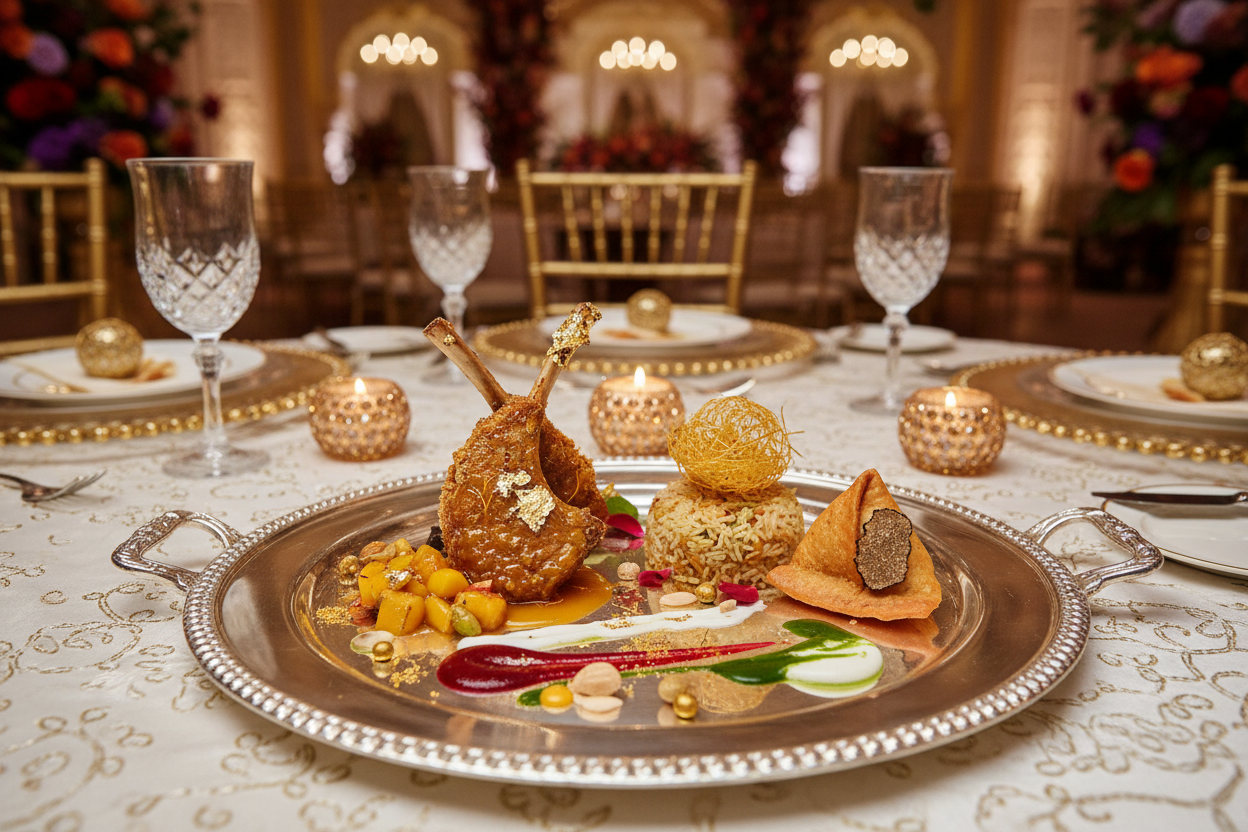
Taste representative dishes, check portioning and presentation, confirm final ingredient/style notes, and document any approved changes. The tasting should result in decisions, not another open-ended shortlist.
7. Coordinate Back-of-House
Confirm kitchen access, service entry, waste management, refrigeration, power, staff meal areas, clearance schedules and replenishment. Guest-facing elegance depends on disciplined back-of-house operations.